
 EN
 CN
 ES
 AR
 FR
 PT
 RU
 KO
 JA
 DE




Pre-Sintering vs Integrated Debinding-Sintering Furnaces: Defects, Yield, Cost
Posted on:2026-09-16 14:35:27
1. Overview of Debinding Pre-Sintering and Debinding-Sintering Integrated Process
1.1 Core Process Definition and Technical Positioning
Separate debinding + pre-sintering adopts two-stage independent furnace operation; integrated debinding & sintering completes binder removal and high-temperature densification inside one chamber without workpiece transfer.
Debinding (binder burnout) is the prerequisite thermal process for ceramic green bodies, MIM metal compacts and LTCC/MLCC green sheets. Organic binders, plasticizers and dispersants added during forming will decompose and release gas under heating. The debinding pre-sintering furnace is designed for independent low-to-medium temperature binder removal and pre-sintering hardening; after the organic phase is fully eliminated, the semi-finished product is transferred to a high-temperature sintering furnace for densification. The integrated debinding & sintering furnace integrates exhaust treatment, atmosphere switching, multi-stage temperature ramping, and completes debinding, holding and high-temperature sintering sequentially in the same hot zone. The two equipment routes form two mainstream production schemes for precision ceramic and powder metallurgy industries, with obvious differences in defect risk, batch throughput and operating cost.
1.2 Common Industrial Pain Points in Debinding and Sintering
Unreasonable furnace selection and improper heating curve lead to green body bubbling, delamination, cracking, carbon residue, deformation and low yield, which are the main bottlenecks restricting mass production of precision components.
Most production lines underestimate the sensitivity of green bodies during binder decomposition. Excessively fast heating in the main debinding zone (200–600 ℃) causes rapid gas accumulation inside the blank; poor exhaust design leads to secondary carbon deposition and pollution. If using separate furnaces, transfer after pre-sintering introduces collision, contamination and temperature shock; if using integrated furnaces without independent exhaust protection, pyrolysis tar will condense on heating elements and insulation, shortening furnace service life. Clarifying the boundary between independent pre-sintering debinding and integrated debinding-sintering equipment helps avoid process mismatch and repeated yield loss.
1.3 The Value of Comparative Selection
Selecting split debinding pre-sintering furnace or integrated debinding sintering furnace according to blank thickness, binder type, dimensional tolerance and production scale is the core way to balance defect control, yield and manufacturing cost.
The essential difference lies in whether the workpiece is transferred between the debinding stage and sintering stage, and whether the furnace chamber bears both tar exhaust and high-temperature sintering working conditions. This difference affects exhaust efficiency, atmosphere purity, temperature uniformity, maintenance cycle and unit production cost. This article compares the two schemes from three dimensions: defect control mechanism, batch yield performance and full-cycle input and operation cost, and forms a scenario-based selection standard for LTCC, MLCC, ceramic structural parts and MIM injection molded parts.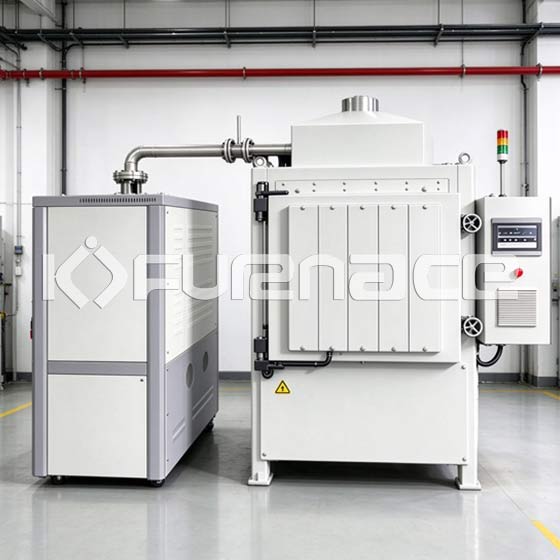
2. Process Mechanism and Defect Control Capability Comparison
2.1 Debinding Exhaust Logic and Carbon Residue Risk
Independent debinding pre-sintering furnace is equipped with special tar condensation and exhaust system, low carbon residue risk; integrated furnace must use staged atmosphere and differential pressure exhaust to avoid tar contamination of hot zone.
In the 200–600 ℃ main debinding interval, organic binder decomposes into hydrocarbon gas, tar vapor and CO. The independent debinding pre-sintering furnace is optimized for low-medium temperature exhaust, equipped with cold trap, tar filter and forced circulating gas flushing. Pyrolysis products are discharged out of the hot zone in time, and the furnace lining and heating elements will not be polluted by tar. After pre-sintering hardening, the residual carbon is controlled stably, suitable for thick blanks and high binder content formulas. For integrated debinding sintering furnace, the exhaust channel and atmosphere must be strictly separated: low vacuum / oxidizing atmosphere for debinding, then purging and switching to inert / reducing / vacuum sintering atmosphere. If the exhaust flow is not matched, tar will condense on insulation and heaters, forming carbon contamination sources and polluting subsequent sintered batches.
2.2 Green Body Stress, Cracking and Deformation Control
Integrated furnace eliminates transfer impact and temperature shock, better for thin, fragile and high-precision blanks; split pre-sintering scheme can perform slow gradient debinding with lower thermal stress for thick large-size blanks.
The green body is extremely fragile before complete debinding. The integrated process does not open the furnace or transfer the workpiece. After slow debinding and heat preservation, it directly rises to sintering temperature continuously, avoiding mechanical collision, sudden temperature drop and re-adsorption of moisture. It has obvious advantages for thin LTCC sheets, ceramic substrates and small precision MIM parts. For thick blanks, large structural ceramics and high binder content systems, the split debinding pre-sintering furnace can set ultra-slow ramp rate (0.5–1 ℃/min) and long-time multi-stage heat preservation, with large hot zone capacity and stable gas circulation. The blank is fully hardened after pre-sintering, and the risk of cracking during subsequent high-temperature sintering is reduced. But the transfer link will bring hidden deformation and contamination risks.
2.3 Temperature Uniformity and Atmosphere Switching Accuracy
Debinding pre-sintering furnace focuses on low-medium temperature circulating atmosphere uniformity; integrated furnace needs dual design for low-temperature exhaust and high-temperature sintering atmosphere switching.
The working temperature of debinding pre-sintering furnace is mostly below 800 ℃, adopting hot air circulation + multi-zone heating, the temperature difference in the effective loading area is small, and the atmosphere replacement speed is fast. It is mainly used for oxidative debinding in air or low-concentration protective atmosphere. The integrated furnace needs to cover two extreme working conditions: low-temperature exhaust with large gas flow and high-temperature sintering with high-purity inert / vacuum / hydrogen atmosphere. The sealing, gas path and pressure control system are more complex. Poor design will lead to atmosphere cross-contamination, oxygen fluctuation during sintering, and inconsistent density and shrinkage of finished products.
3. Batch Yield, Production Rhythm and Capacity Analysis
3.1 Single-Batch Cycle and Production Beat
Split debinding + sintering two-furnace line can realize parallel production of multiple batches; integrated furnace single-cycle is long, and the whole production line output is limited by one furnace rhythm.
The debinding cycle is far longer than the pure sintering cycle. When adopting split scheme, multiple debinding furnaces can be matched with one high-temperature sintering furnace, realizing continuous feeding and parallel processing, which is suitable for large-scale mass production. After pre-sintering hardening, the blanks are stored and batched into the sintering furnace, the equipment utilization rate is high. The integrated furnace runs “debinding → purge → sintering → cooling” in series, the whole cycle is long, and the furnace is occupied for a long time. It cannot separate the debinding waiting time and sintering time. It is suitable for small and medium batch, high-mix low-volume and high-value precision parts, but the hourly output is lower than the split configuration.
3.2 Batch Consistency and Rework Loss
Integrated furnace has stable process chain without transfer variable, excellent batch repeatability; split scheme is easy to introduce human operation and environmental interference during transfer.
All parameters of integrated furnace (ramp, hold, gas flow, pressure, atmosphere) are solidified in one program, no manual transfer, no blank exposure to air, so the shrinkage rate, density and surface quality of each batch are stable. The split process is affected by operator operation, transfer tooling, ambient humidity and dust. Even if the furnace parameters are fixed, slight differences will appear between batches. However, the split scheme has a unique advantage: defective products can be screened after pre-sintering, and unqualified blanks will not enter the high-temperature sintering furnace, saving high-temperature sintering energy and time cost.
3.3 Loading Capacity and Material Adaptability
Debinding pre-sintering furnace supports large tray and multi-layer dense loading for thick blanks; integrated furnace loading layout must reserve exhaust channel and avoid local gas trapping.
The core of debinding is smooth gas discharge. The independent debinding furnace is designed for large-volume binder decomposition, and the gap between workpieces can be reasonably arranged for large batch loading. The integrated furnace needs to balance exhaust channel and sintering temperature field. The stacking density cannot be too high, otherwise the gas trapped in the blank will cause local explosion and cracking. For products with simple shape and uniform thickness, both schemes are applicable; for heterogeneous thick blanks and complex structural parts, the split debinding pre-sintering scheme is more flexible in process debugging.
4. Full-Cycle Equipment Investment, Maintenance and Operation Cost
4.1 Upfront Capital Investment and Layout Cost
Single integrated debinding sintering furnace has high unit price and low supporting equipment; split scheme requires multiple furnaces and transfer tooling, with high initial investment for large production lines.
Integrated furnace integrates vacuum system, multi-atmosphere gas path, tar capture, high-temperature heating and precise pressure control. The single equipment cost is higher than ordinary debinding pre-sintering furnace. But only one furnace is needed for the whole process, the site layout is compact, and the transfer manipulator or material frame is reduced. Split production line needs to configure debinding furnace group + independent high-temperature sintering furnace + transfer fixture, material storage area, and the total investment of the production line is higher. However, users can expand the scale step by step according to the order volume, and the investment risk is dispersed.
4.2 Maintenance Cycle and Consumable Loss
Debinding pre-sintering furnace is polluted by tar and binder for a long time, and the filter, cold trap and sealing parts need frequent replacement; integrated furnace has higher maintenance threshold and higher cost once polluted.
The consumables of independent debinding furnace are mainly tar filter, exhaust pipeline, cold trap medium, which are low-cost and easy to replace. The high-temperature sintering furnace is separated from pollution, the heating element and insulation material have long service life. The integrated furnace chamber bears both tar exhaust and high-temperature sintering. Once the exhaust control fails, tar will adhere to the graphite or alumina insulation layer and heating components. Cleaning and replacement costs are high, and the maintenance cycle is longer. It requires higher-level process engineers for daily parameter debugging and fault judgment.
4.3 Energy Consumption and Hidden Cost of Yield Loss
Large-scale stable mass production usually has lower unit energy consumption for split configuration; high-value small-batch products reduce the hidden loss of transfer damage by integrated furnace.
Split production can make full use of the heat of the pre-sintered blank entering the sintering furnace, and the equipment runs in parallel, with high energy efficiency. The main hidden cost is the scrap rate caused by transfer. Integrated furnace avoids transfer damage, and the yield advantage is prominent for high-value fragile ceramic chips and MIM medical parts. But every batch needs to go through the complete low-temperature exhaust and high-temperature heating-cooling cycle, and the idle energy consumption is obvious when the batch is small. In cost accounting, the value of the blank itself must be included, not only electricity and gas consumption.
5. Scenario-Based Selection Guide and Process Optimization Suggestions
5.1 Priority Selection of Debinding Pre-Sintering Furnace (Split Process)
Thick ceramic blanks, high binder content formula, large-batch low-to-medium value structural parts, mass production lines with graded screening demand, prefer split debinding pre-sintering + independent sintering furnace.
Typical applications: thick ceramic structural parts, large-size ceramic green bodies, conventional powder metallurgy compacts, large-scale MLCC batch production. The production line adopts multiple debinding furnaces matched with a small number of high-temperature sintering furnaces, which can realize high-capacity and low-cost production. After pre-sintering, appearance and density screening are carried out to avoid wasting high-temperature energy on defective blanks. Key optimization points: design uniform airflow channels, set multi-stage slow ramp curves, regularly clean exhaust pipelines and tar filters, and control the transfer speed and ambient dust.
5.2 Priority Selection of Integrated Debinding & Sintering Furnace
Thin fragile substrates, high-precision LTCC, MIM medical and aerospace components, high dimensional tolerance requirements, small-batch high-mix high-value products, prefer integrated debinding sintering furnace.
Typical applications: LTCC circuit substrates, ceramic packaging shells, tiny MIM precision parts, 3D printed ceramic components. The integrated closed thermal process eliminates transfer stress and contamination, and the shrinkage consistency and dimensional stability are better. Key optimization points: differential pressure staged exhaust, separate low-temperature debinding atmosphere and high-temperature sintering atmosphere, set sufficient purging time between stages, install tar capture device before vacuum pump, and avoid carbon contamination in the hot zone.
5.3 Hybrid Process and Industry Development Trend
Modular integrated furnace and linked automatic split line become two mainstream directions; intelligent staged exhaust and atmosphere prediction control reduce the contradiction between yield and cost.
With the upgrading of precision ceramics and MIM industry, equipment is developing in two directions. On the one hand, large automatic split production lines are equipped with transfer robots, which reduce manual interference and retain the advantages of parallel high throughput. On the other hand, the integrated furnace continuously optimizes the independent exhaust module, reduces tar pollution to the hot zone, and expands the applicable range of thick blanks. The core of future process iteration is intelligent curve automatic matching: automatically adjust ramp rate, holding time and exhaust flow according to blank thickness and binder formula, to achieve defect-free debinding and stable sintering. Reasonable furnace matching will become the key to improve the core competitiveness of ceramic and powder metallurgy manufacturers.
Zhengzhou Kejia Technology Co., Ltd. is a high-tech enterprise specializing in R&D and sales of heat treatment products, including muffle furnaces, tube furnaces, vacuum furnaces and more, widely used in metallurgy, ceramic sintering, battery materials, semiconductors, aerospace and other fields.
For inquiries and customized solutions, contact us via WhatsApp: +86 18037178440 or Email: web@kejiafurnace.com.
1.1 Core Process Definition and Technical Positioning
Separate debinding + pre-sintering adopts two-stage independent furnace operation; integrated debinding & sintering completes binder removal and high-temperature densification inside one chamber without workpiece transfer.
Debinding (binder burnout) is the prerequisite thermal process for ceramic green bodies, MIM metal compacts and LTCC/MLCC green sheets. Organic binders, plasticizers and dispersants added during forming will decompose and release gas under heating. The debinding pre-sintering furnace is designed for independent low-to-medium temperature binder removal and pre-sintering hardening; after the organic phase is fully eliminated, the semi-finished product is transferred to a high-temperature sintering furnace for densification. The integrated debinding & sintering furnace integrates exhaust treatment, atmosphere switching, multi-stage temperature ramping, and completes debinding, holding and high-temperature sintering sequentially in the same hot zone. The two equipment routes form two mainstream production schemes for precision ceramic and powder metallurgy industries, with obvious differences in defect risk, batch throughput and operating cost.
1.2 Common Industrial Pain Points in Debinding and Sintering
Unreasonable furnace selection and improper heating curve lead to green body bubbling, delamination, cracking, carbon residue, deformation and low yield, which are the main bottlenecks restricting mass production of precision components.
Most production lines underestimate the sensitivity of green bodies during binder decomposition. Excessively fast heating in the main debinding zone (200–600 ℃) causes rapid gas accumulation inside the blank; poor exhaust design leads to secondary carbon deposition and pollution. If using separate furnaces, transfer after pre-sintering introduces collision, contamination and temperature shock; if using integrated furnaces without independent exhaust protection, pyrolysis tar will condense on heating elements and insulation, shortening furnace service life. Clarifying the boundary between independent pre-sintering debinding and integrated debinding-sintering equipment helps avoid process mismatch and repeated yield loss.
1.3 The Value of Comparative Selection
Selecting split debinding pre-sintering furnace or integrated debinding sintering furnace according to blank thickness, binder type, dimensional tolerance and production scale is the core way to balance defect control, yield and manufacturing cost.
The essential difference lies in whether the workpiece is transferred between the debinding stage and sintering stage, and whether the furnace chamber bears both tar exhaust and high-temperature sintering working conditions. This difference affects exhaust efficiency, atmosphere purity, temperature uniformity, maintenance cycle and unit production cost. This article compares the two schemes from three dimensions: defect control mechanism, batch yield performance and full-cycle input and operation cost, and forms a scenario-based selection standard for LTCC, MLCC, ceramic structural parts and MIM injection molded parts.
2. Process Mechanism and Defect Control Capability Comparison
2.1 Debinding Exhaust Logic and Carbon Residue Risk
Independent debinding pre-sintering furnace is equipped with special tar condensation and exhaust system, low carbon residue risk; integrated furnace must use staged atmosphere and differential pressure exhaust to avoid tar contamination of hot zone.
In the 200–600 ℃ main debinding interval, organic binder decomposes into hydrocarbon gas, tar vapor and CO. The independent debinding pre-sintering furnace is optimized for low-medium temperature exhaust, equipped with cold trap, tar filter and forced circulating gas flushing. Pyrolysis products are discharged out of the hot zone in time, and the furnace lining and heating elements will not be polluted by tar. After pre-sintering hardening, the residual carbon is controlled stably, suitable for thick blanks and high binder content formulas. For integrated debinding sintering furnace, the exhaust channel and atmosphere must be strictly separated: low vacuum / oxidizing atmosphere for debinding, then purging and switching to inert / reducing / vacuum sintering atmosphere. If the exhaust flow is not matched, tar will condense on insulation and heaters, forming carbon contamination sources and polluting subsequent sintered batches.
2.2 Green Body Stress, Cracking and Deformation Control
Integrated furnace eliminates transfer impact and temperature shock, better for thin, fragile and high-precision blanks; split pre-sintering scheme can perform slow gradient debinding with lower thermal stress for thick large-size blanks.
The green body is extremely fragile before complete debinding. The integrated process does not open the furnace or transfer the workpiece. After slow debinding and heat preservation, it directly rises to sintering temperature continuously, avoiding mechanical collision, sudden temperature drop and re-adsorption of moisture. It has obvious advantages for thin LTCC sheets, ceramic substrates and small precision MIM parts. For thick blanks, large structural ceramics and high binder content systems, the split debinding pre-sintering furnace can set ultra-slow ramp rate (0.5–1 ℃/min) and long-time multi-stage heat preservation, with large hot zone capacity and stable gas circulation. The blank is fully hardened after pre-sintering, and the risk of cracking during subsequent high-temperature sintering is reduced. But the transfer link will bring hidden deformation and contamination risks.
2.3 Temperature Uniformity and Atmosphere Switching Accuracy
Debinding pre-sintering furnace focuses on low-medium temperature circulating atmosphere uniformity; integrated furnace needs dual design for low-temperature exhaust and high-temperature sintering atmosphere switching.
The working temperature of debinding pre-sintering furnace is mostly below 800 ℃, adopting hot air circulation + multi-zone heating, the temperature difference in the effective loading area is small, and the atmosphere replacement speed is fast. It is mainly used for oxidative debinding in air or low-concentration protective atmosphere. The integrated furnace needs to cover two extreme working conditions: low-temperature exhaust with large gas flow and high-temperature sintering with high-purity inert / vacuum / hydrogen atmosphere. The sealing, gas path and pressure control system are more complex. Poor design will lead to atmosphere cross-contamination, oxygen fluctuation during sintering, and inconsistent density and shrinkage of finished products.
3. Batch Yield, Production Rhythm and Capacity Analysis
3.1 Single-Batch Cycle and Production Beat
Split debinding + sintering two-furnace line can realize parallel production of multiple batches; integrated furnace single-cycle is long, and the whole production line output is limited by one furnace rhythm.
The debinding cycle is far longer than the pure sintering cycle. When adopting split scheme, multiple debinding furnaces can be matched with one high-temperature sintering furnace, realizing continuous feeding and parallel processing, which is suitable for large-scale mass production. After pre-sintering hardening, the blanks are stored and batched into the sintering furnace, the equipment utilization rate is high. The integrated furnace runs “debinding → purge → sintering → cooling” in series, the whole cycle is long, and the furnace is occupied for a long time. It cannot separate the debinding waiting time and sintering time. It is suitable for small and medium batch, high-mix low-volume and high-value precision parts, but the hourly output is lower than the split configuration.
3.2 Batch Consistency and Rework Loss
Integrated furnace has stable process chain without transfer variable, excellent batch repeatability; split scheme is easy to introduce human operation and environmental interference during transfer.
All parameters of integrated furnace (ramp, hold, gas flow, pressure, atmosphere) are solidified in one program, no manual transfer, no blank exposure to air, so the shrinkage rate, density and surface quality of each batch are stable. The split process is affected by operator operation, transfer tooling, ambient humidity and dust. Even if the furnace parameters are fixed, slight differences will appear between batches. However, the split scheme has a unique advantage: defective products can be screened after pre-sintering, and unqualified blanks will not enter the high-temperature sintering furnace, saving high-temperature sintering energy and time cost.
3.3 Loading Capacity and Material Adaptability
Debinding pre-sintering furnace supports large tray and multi-layer dense loading for thick blanks; integrated furnace loading layout must reserve exhaust channel and avoid local gas trapping.
The core of debinding is smooth gas discharge. The independent debinding furnace is designed for large-volume binder decomposition, and the gap between workpieces can be reasonably arranged for large batch loading. The integrated furnace needs to balance exhaust channel and sintering temperature field. The stacking density cannot be too high, otherwise the gas trapped in the blank will cause local explosion and cracking. For products with simple shape and uniform thickness, both schemes are applicable; for heterogeneous thick blanks and complex structural parts, the split debinding pre-sintering scheme is more flexible in process debugging.
4. Full-Cycle Equipment Investment, Maintenance and Operation Cost
4.1 Upfront Capital Investment and Layout Cost
Single integrated debinding sintering furnace has high unit price and low supporting equipment; split scheme requires multiple furnaces and transfer tooling, with high initial investment for large production lines.
Integrated furnace integrates vacuum system, multi-atmosphere gas path, tar capture, high-temperature heating and precise pressure control. The single equipment cost is higher than ordinary debinding pre-sintering furnace. But only one furnace is needed for the whole process, the site layout is compact, and the transfer manipulator or material frame is reduced. Split production line needs to configure debinding furnace group + independent high-temperature sintering furnace + transfer fixture, material storage area, and the total investment of the production line is higher. However, users can expand the scale step by step according to the order volume, and the investment risk is dispersed.
4.2 Maintenance Cycle and Consumable Loss
Debinding pre-sintering furnace is polluted by tar and binder for a long time, and the filter, cold trap and sealing parts need frequent replacement; integrated furnace has higher maintenance threshold and higher cost once polluted.
The consumables of independent debinding furnace are mainly tar filter, exhaust pipeline, cold trap medium, which are low-cost and easy to replace. The high-temperature sintering furnace is separated from pollution, the heating element and insulation material have long service life. The integrated furnace chamber bears both tar exhaust and high-temperature sintering. Once the exhaust control fails, tar will adhere to the graphite or alumina insulation layer and heating components. Cleaning and replacement costs are high, and the maintenance cycle is longer. It requires higher-level process engineers for daily parameter debugging and fault judgment.
4.3 Energy Consumption and Hidden Cost of Yield Loss
Large-scale stable mass production usually has lower unit energy consumption for split configuration; high-value small-batch products reduce the hidden loss of transfer damage by integrated furnace.
Split production can make full use of the heat of the pre-sintered blank entering the sintering furnace, and the equipment runs in parallel, with high energy efficiency. The main hidden cost is the scrap rate caused by transfer. Integrated furnace avoids transfer damage, and the yield advantage is prominent for high-value fragile ceramic chips and MIM medical parts. But every batch needs to go through the complete low-temperature exhaust and high-temperature heating-cooling cycle, and the idle energy consumption is obvious when the batch is small. In cost accounting, the value of the blank itself must be included, not only electricity and gas consumption.
5. Scenario-Based Selection Guide and Process Optimization Suggestions
5.1 Priority Selection of Debinding Pre-Sintering Furnace (Split Process)
Thick ceramic blanks, high binder content formula, large-batch low-to-medium value structural parts, mass production lines with graded screening demand, prefer split debinding pre-sintering + independent sintering furnace.
Typical applications: thick ceramic structural parts, large-size ceramic green bodies, conventional powder metallurgy compacts, large-scale MLCC batch production. The production line adopts multiple debinding furnaces matched with a small number of high-temperature sintering furnaces, which can realize high-capacity and low-cost production. After pre-sintering, appearance and density screening are carried out to avoid wasting high-temperature energy on defective blanks. Key optimization points: design uniform airflow channels, set multi-stage slow ramp curves, regularly clean exhaust pipelines and tar filters, and control the transfer speed and ambient dust.
5.2 Priority Selection of Integrated Debinding & Sintering Furnace
Thin fragile substrates, high-precision LTCC, MIM medical and aerospace components, high dimensional tolerance requirements, small-batch high-mix high-value products, prefer integrated debinding sintering furnace.
Typical applications: LTCC circuit substrates, ceramic packaging shells, tiny MIM precision parts, 3D printed ceramic components. The integrated closed thermal process eliminates transfer stress and contamination, and the shrinkage consistency and dimensional stability are better. Key optimization points: differential pressure staged exhaust, separate low-temperature debinding atmosphere and high-temperature sintering atmosphere, set sufficient purging time between stages, install tar capture device before vacuum pump, and avoid carbon contamination in the hot zone.
5.3 Hybrid Process and Industry Development Trend
Modular integrated furnace and linked automatic split line become two mainstream directions; intelligent staged exhaust and atmosphere prediction control reduce the contradiction between yield and cost.
With the upgrading of precision ceramics and MIM industry, equipment is developing in two directions. On the one hand, large automatic split production lines are equipped with transfer robots, which reduce manual interference and retain the advantages of parallel high throughput. On the other hand, the integrated furnace continuously optimizes the independent exhaust module, reduces tar pollution to the hot zone, and expands the applicable range of thick blanks. The core of future process iteration is intelligent curve automatic matching: automatically adjust ramp rate, holding time and exhaust flow according to blank thickness and binder formula, to achieve defect-free debinding and stable sintering. Reasonable furnace matching will become the key to improve the core competitiveness of ceramic and powder metallurgy manufacturers.
Zhengzhou Kejia Technology Co., Ltd. is a high-tech enterprise specializing in R&D and sales of heat treatment products, including muffle furnaces, tube furnaces, vacuum furnaces and more, widely used in metallurgy, ceramic sintering, battery materials, semiconductors, aerospace and other fields.
For inquiries and customized solutions, contact us via WhatsApp: +86 18037178440 or Email: web@kejiafurnace.com.
Previous Article:Return to list
Next Article:Tube Furnace Annealing: Atmosphere and Ramp Rate Effects on Grain Size