
 EN
 CN
 ES
 AR
 FR
 PT
 RU
 KO
 JA
 DE




Bell-Type Sintering Furnace Selection: Advantages of Integrated Debinding & Sintering and Temp-Contr
Posted on:2026-10-27 14:46:01
1. Overview of the Bell-Type Furnace and Integrated Debinding & Sintering
1.1 Process definition and furnace positioning
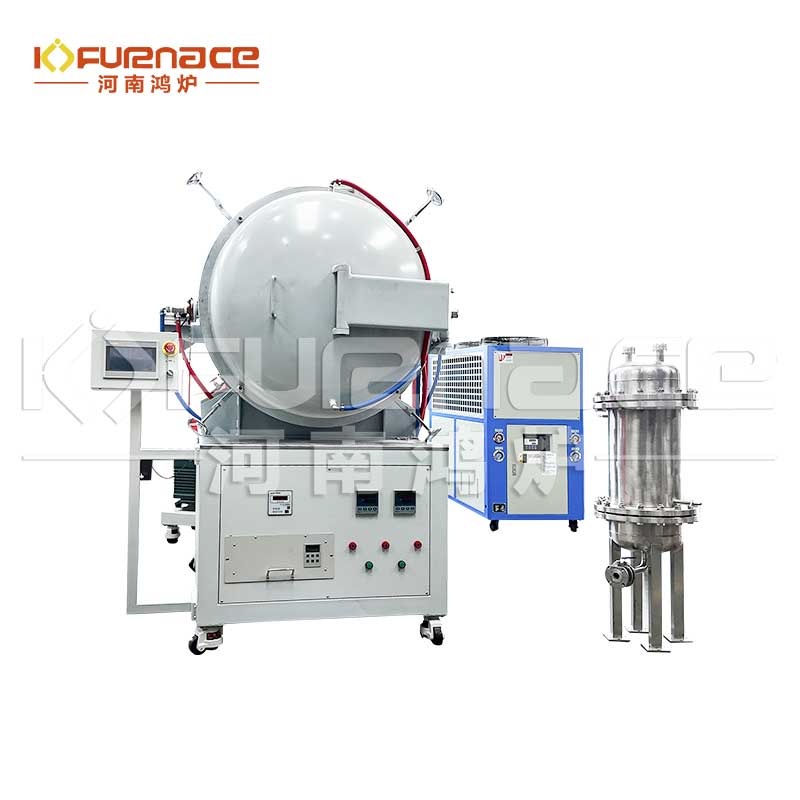
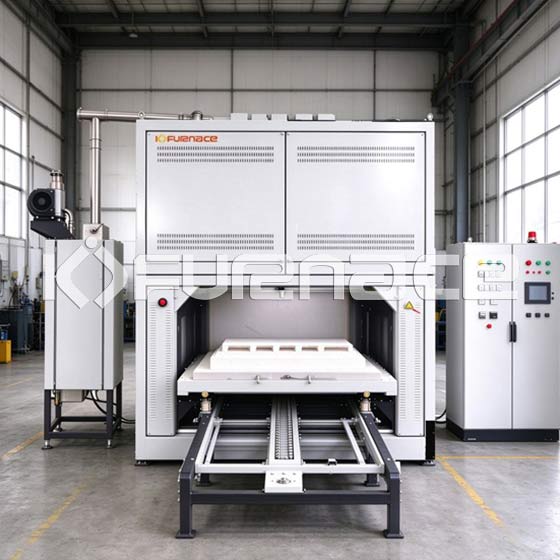
The bell-type integrated debinding & sintering furnace uses a vertical lifting structure to complete low-temperature debinding and high-temperature sintering sequentially in one chamber, so the green body never moves between machines.
The bell furnace consists of a fixed hearth and a liftable bell cover: raising the cover allows loading and unloading, and lowering it forms a sealed hot zone. The integrated furnace merges binder removal, purging and switching, and high-temperature densification into a single thermal cycle, making it especially suitable for LTCC, MLCC, ceramic packages and MIM precision parts. Compared with a separate debinding furnace plus an independent sintering furnace, the integrated route removes the transfer step, tightening the process and improving batch consistency.
1.2 Industry pain points
When debinding and sintering are carried out in separate furnaces, transfer introduces collision, contamination and thermal shock, and poorly coordinated heating zones cause blistering, cracking and coking.
During the debinding stage (200-600°C), the binder decomposes and releases gas. If heating is too fast or exhaust is inadequate, gas accumulates inside the green body and triggers blistering and delamination; thin, fragile parts are easily damaged during transfer after pre-sintering. Through a sealed thermal cycle and programmed temperature control, the integrated furnace significantly reduces these defects and has become a mainstream choice for precision ceramics production.
The integrated furnace completes four stages in sequence. In the low-temperature debinding stage (200-600°C), the binder decomposes and evolves stepwise under slow ramping to avoid coking and blistering. Next, a purging and atmosphere-switch stage isolates the debinding and sintering atmospheres and fully purges residual gas. The high-temperature sintering stage then ramps to the target temperature and holds, densifying the body so that size and density stabilize. Finally, programmed cooling releases stress in stages to lock the high-temperature structure and prevent cracking. Multi-zone independent temperature control and atmosphere isolation run throughout as the core of temperature management.
2. Core Process Advantages of Integrated Debinding & Sintering
2.1 Eliminating transfer variables for higher batch consistency
All ramp, hold, flow, pressure and atmosphere parameters are fixed in one program, so shrinkage, density and surface quality remain stable from batch to batch.
The green body stays in a controlled atmosphere and temperature environment at all times, without exposure to air or manual handling, ruling out operator, fixture and dust interference. The yield advantage is most significant for tight-tolerance LTCC substrates and high-value MIM medical parts.
2.2 Controllable debinding exhaust and atmosphere switching
The debinding stage uses an oxidizing or nitrogen atmosphere to promote binder decomposition, and the sintering stage switches to reducing, inert or vacuum conditions, with sufficient purging between the stages.
The furnace can exhaust by differential-pressure in stages, strictly isolating the debinding and sintering atmospheres. Tar traps are installed before the vacuum pump to prevent pyrolysis tar from adhering to the insulation and heating elements, protecting surface quality while extending furnace life.
2.3 Saving floor space and supporting equipment
Only one furnace is needed, compact in layout, eliminating transfer manipulators, racks and a separate line of debinding furnaces.
For small-to-medium batch, multi-variety, high-value products, the integrated furnace keeps single-unit investment manageable and avoids transfer energy and scrap losses, giving better total cost of ownership.
3. Temperature-Control System Design Essentials
3.1 Multi-zone independent temperature control
A bell furnace should use multi-zone independent PID closed-loop control, with each zone setting its own ramp, hold and cooling curves to build a stable temperature profile.
The temperature field in a vertical chamber tends to be uneven along the height direction. Independent heating and control in the upper, middle and lower zones ensure furnace temperature uniformity, with control accuracy of ±1°C in the soak zone.
3.2 Slow ramp curve in the debinding zone
The main debinding zone (200-600°C) must use stepwise slow ramping so that the binder decomposes and evolves progressively, avoiding rapid gas buildup.
Ramp rate, hold time and exhaust flow should be set according to part thickness and binder content. For thick parts or high-binder formulations, lower the ramp rate and extend the debinding hold.
3.3 Programmed cooling and atmosphere isolation
Cooling is carried out in stages, first releasing stress slowly, then increasing the rate moderately; the sintering and debinding atmospheres are switched automatically with full purging between stages.
Rapid cooling of brittle ceramics can cause thermal-shock cracking, so thick parts must include a sufficient low-temperature hold. Allow enough purging time during atmosphere switching to prevent residual gas from affecting sintering quality.
4. Key Furnace Selection Parameters
4.1 Temperature range and heating elements
Reserve adequate temperature headroom above the material's sintering temperature; heating elements may be resistance wire, silicon carbide or molybdenum disilicide.
The rated temperature of an integrated debinding & sintering furnace typically spans 1200-1700°C. Use MoSi2 elements for high-temperature ceramics and LTCC, and SiC elements for ordinary alumina ceramics, matched to the process needs and atmosphere conditions.
4.2 Chamber material and atmosphere system
Choose an alumina-fiber or corundum chamber with low impurity and low dusting to reduce contamination; equip the furnace with atmosphere switching, flow control, pressure protection and tar traps.
The chamber must resist high temperature and contamination. The integrated furnace should be equipped with atmosphere switching, flow control, pressure protection and tar-capture devices to realize independent atmosphere control in the debinding and sintering stages.
5. Common Problems and Countermeasures
Common problems usually trace to two root causes — uncoordinated temperature control and poor exhaust — and each has a clear remedy.
1. Green-body blistering and cracking. Too-fast ramping in the debinding zone and poor gas release let gas accumulate inside the part. Countermeasure: use stepwise slow ramping, keep exhaust channels open, and control the ramp rate.
2. Surface coking and darkening. Tar reflux and insufficient exhaust flow deposit carbon on the part. Countermeasure: add tar traps, increase exhaust flow, and clean the lines regularly.
3. Inconsistent batch shrinkage. An uneven temperature field or residual gas after an atmosphere switch destabilizes contraction. Countermeasure: use multi-zone independent control and purge fully between stages.
4. Ceramic part cracking. Cooling too fast or oversized wall thickness causes thermal stress. Countermeasure: add a low-temperature hold, cool in stages, and avoid quenching thick parts.
6. Selection Guidance and Summary
6.1 Scenario judgment
Prioritize the bell-type integrated debinding & sintering furnace for thin fragile substrates, high-precision LTCC, MIM medical and aerospace parts, tight dimensional tolerances, and small-batch multi-variety high-value products.
For thick-walled structural parts, high-binder formulations and high-volume, mid-to-low-value lines, a separate debinding pre-sintering furnace plus an independent sintering furnace still offers advantages in capacity and cost; choose based on actual output and product value.
6.2 Process optimization suggestions
After selection, focus on optimizing differential-pressure stage exhaust, atmosphere isolation and intelligent curve matching to achieve defect-free debinding and stable sintering.
Automatically adjust ramp rate, hold time and exhaust flow according to part thickness and binder formulation. Combined with multi-zone independent control and tar traps, this significantly improves yield and extends furnace life.
Zhengzhou KJ Technology Co., Ltd. is a high-tech enterprise specializing in R&D and sales of heat treatment products, including muffle furnaces, tube furnaces, vacuum furnaces and more, widely used in metallurgy, ceramic sintering, battery materials, semiconductors, aerospace and other fields.
For inquiries and customized solutions, contact us via WhatsApp: +86 18037178440 or Email: web@kejiafurnace.com.
1.1 Process definition and furnace positioning
The bell-type integrated debinding & sintering furnace uses a vertical lifting structure to complete low-temperature debinding and high-temperature sintering sequentially in one chamber, so the green body never moves between machines.
The bell furnace consists of a fixed hearth and a liftable bell cover: raising the cover allows loading and unloading, and lowering it forms a sealed hot zone. The integrated furnace merges binder removal, purging and switching, and high-temperature densification into a single thermal cycle, making it especially suitable for LTCC, MLCC, ceramic packages and MIM precision parts. Compared with a separate debinding furnace plus an independent sintering furnace, the integrated route removes the transfer step, tightening the process and improving batch consistency.
1.2 Industry pain points
When debinding and sintering are carried out in separate furnaces, transfer introduces collision, contamination and thermal shock, and poorly coordinated heating zones cause blistering, cracking and coking.
During the debinding stage (200-600°C), the binder decomposes and releases gas. If heating is too fast or exhaust is inadequate, gas accumulates inside the green body and triggers blistering and delamination; thin, fragile parts are easily damaged during transfer after pre-sintering. Through a sealed thermal cycle and programmed temperature control, the integrated furnace significantly reduces these defects and has become a mainstream choice for precision ceramics production.
The integrated furnace completes four stages in sequence. In the low-temperature debinding stage (200-600°C), the binder decomposes and evolves stepwise under slow ramping to avoid coking and blistering. Next, a purging and atmosphere-switch stage isolates the debinding and sintering atmospheres and fully purges residual gas. The high-temperature sintering stage then ramps to the target temperature and holds, densifying the body so that size and density stabilize. Finally, programmed cooling releases stress in stages to lock the high-temperature structure and prevent cracking. Multi-zone independent temperature control and atmosphere isolation run throughout as the core of temperature management.
2. Core Process Advantages of Integrated Debinding & Sintering
2.1 Eliminating transfer variables for higher batch consistency
All ramp, hold, flow, pressure and atmosphere parameters are fixed in one program, so shrinkage, density and surface quality remain stable from batch to batch.
The green body stays in a controlled atmosphere and temperature environment at all times, without exposure to air or manual handling, ruling out operator, fixture and dust interference. The yield advantage is most significant for tight-tolerance LTCC substrates and high-value MIM medical parts.
2.2 Controllable debinding exhaust and atmosphere switching
The debinding stage uses an oxidizing or nitrogen atmosphere to promote binder decomposition, and the sintering stage switches to reducing, inert or vacuum conditions, with sufficient purging between the stages.
The furnace can exhaust by differential-pressure in stages, strictly isolating the debinding and sintering atmospheres. Tar traps are installed before the vacuum pump to prevent pyrolysis tar from adhering to the insulation and heating elements, protecting surface quality while extending furnace life.
2.3 Saving floor space and supporting equipment
Only one furnace is needed, compact in layout, eliminating transfer manipulators, racks and a separate line of debinding furnaces.
For small-to-medium batch, multi-variety, high-value products, the integrated furnace keeps single-unit investment manageable and avoids transfer energy and scrap losses, giving better total cost of ownership.
3. Temperature-Control System Design Essentials
3.1 Multi-zone independent temperature control
A bell furnace should use multi-zone independent PID closed-loop control, with each zone setting its own ramp, hold and cooling curves to build a stable temperature profile.
The temperature field in a vertical chamber tends to be uneven along the height direction. Independent heating and control in the upper, middle and lower zones ensure furnace temperature uniformity, with control accuracy of ±1°C in the soak zone.
3.2 Slow ramp curve in the debinding zone
The main debinding zone (200-600°C) must use stepwise slow ramping so that the binder decomposes and evolves progressively, avoiding rapid gas buildup.
Ramp rate, hold time and exhaust flow should be set according to part thickness and binder content. For thick parts or high-binder formulations, lower the ramp rate and extend the debinding hold.
3.3 Programmed cooling and atmosphere isolation
Cooling is carried out in stages, first releasing stress slowly, then increasing the rate moderately; the sintering and debinding atmospheres are switched automatically with full purging between stages.
Rapid cooling of brittle ceramics can cause thermal-shock cracking, so thick parts must include a sufficient low-temperature hold. Allow enough purging time during atmosphere switching to prevent residual gas from affecting sintering quality.
4. Key Furnace Selection Parameters
4.1 Temperature range and heating elements
Reserve adequate temperature headroom above the material's sintering temperature; heating elements may be resistance wire, silicon carbide or molybdenum disilicide.
The rated temperature of an integrated debinding & sintering furnace typically spans 1200-1700°C. Use MoSi2 elements for high-temperature ceramics and LTCC, and SiC elements for ordinary alumina ceramics, matched to the process needs and atmosphere conditions.
4.2 Chamber material and atmosphere system
Choose an alumina-fiber or corundum chamber with low impurity and low dusting to reduce contamination; equip the furnace with atmosphere switching, flow control, pressure protection and tar traps.
The chamber must resist high temperature and contamination. The integrated furnace should be equipped with atmosphere switching, flow control, pressure protection and tar-capture devices to realize independent atmosphere control in the debinding and sintering stages.
5. Common Problems and Countermeasures
Common problems usually trace to two root causes — uncoordinated temperature control and poor exhaust — and each has a clear remedy.
1. Green-body blistering and cracking. Too-fast ramping in the debinding zone and poor gas release let gas accumulate inside the part. Countermeasure: use stepwise slow ramping, keep exhaust channels open, and control the ramp rate.
2. Surface coking and darkening. Tar reflux and insufficient exhaust flow deposit carbon on the part. Countermeasure: add tar traps, increase exhaust flow, and clean the lines regularly.
3. Inconsistent batch shrinkage. An uneven temperature field or residual gas after an atmosphere switch destabilizes contraction. Countermeasure: use multi-zone independent control and purge fully between stages.
4. Ceramic part cracking. Cooling too fast or oversized wall thickness causes thermal stress. Countermeasure: add a low-temperature hold, cool in stages, and avoid quenching thick parts.
6. Selection Guidance and Summary
6.1 Scenario judgment
Prioritize the bell-type integrated debinding & sintering furnace for thin fragile substrates, high-precision LTCC, MIM medical and aerospace parts, tight dimensional tolerances, and small-batch multi-variety high-value products.
For thick-walled structural parts, high-binder formulations and high-volume, mid-to-low-value lines, a separate debinding pre-sintering furnace plus an independent sintering furnace still offers advantages in capacity and cost; choose based on actual output and product value.
6.2 Process optimization suggestions
After selection, focus on optimizing differential-pressure stage exhaust, atmosphere isolation and intelligent curve matching to achieve defect-free debinding and stable sintering.
Automatically adjust ramp rate, hold time and exhaust flow according to part thickness and binder formulation. Combined with multi-zone independent control and tar traps, this significantly improves yield and extends furnace life.
Zhengzhou KJ Technology Co., Ltd. is a high-tech enterprise specializing in R&D and sales of heat treatment products, including muffle furnaces, tube furnaces, vacuum furnaces and more, widely used in metallurgy, ceramic sintering, battery materials, semiconductors, aerospace and other fields.
For inquiries and customized solutions, contact us via WhatsApp: +86 18037178440 or Email: web@kejiafurnace.com.