
 EN
 CN
 ES
 AR
 FR
 PT
 RU
 KO
 JA
 DE




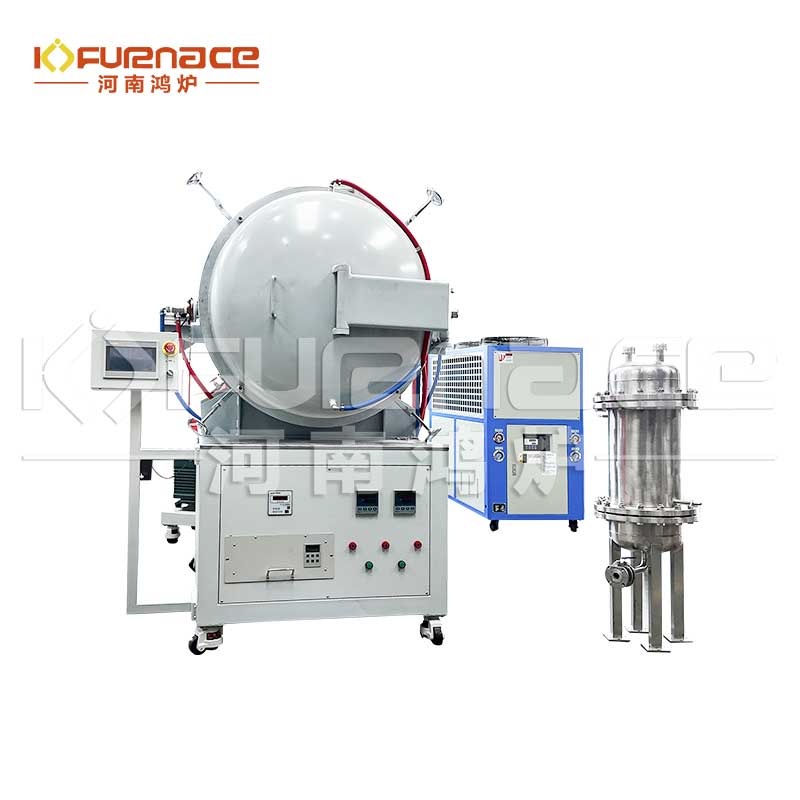
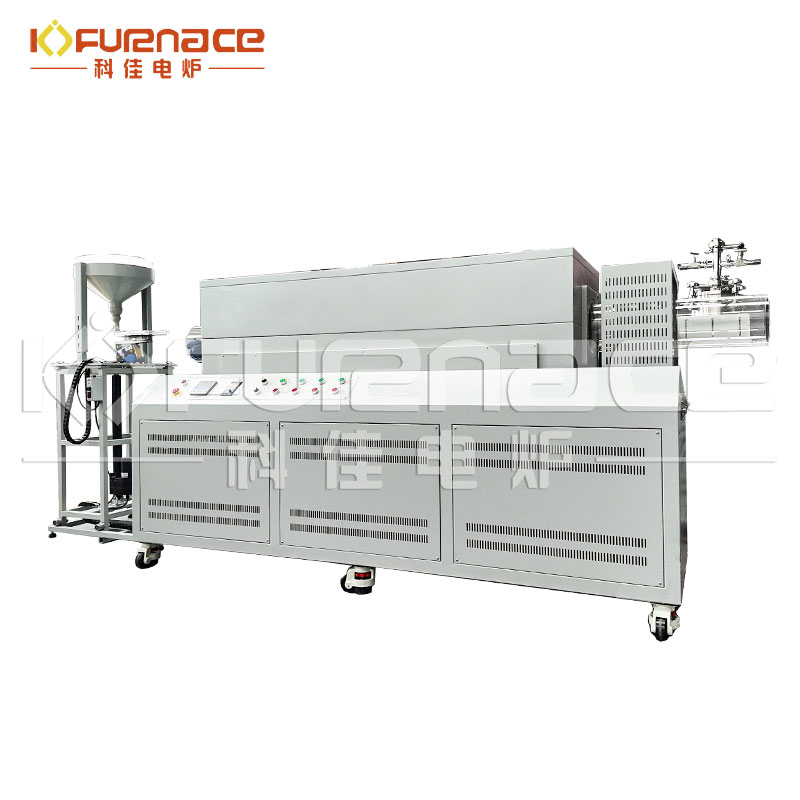
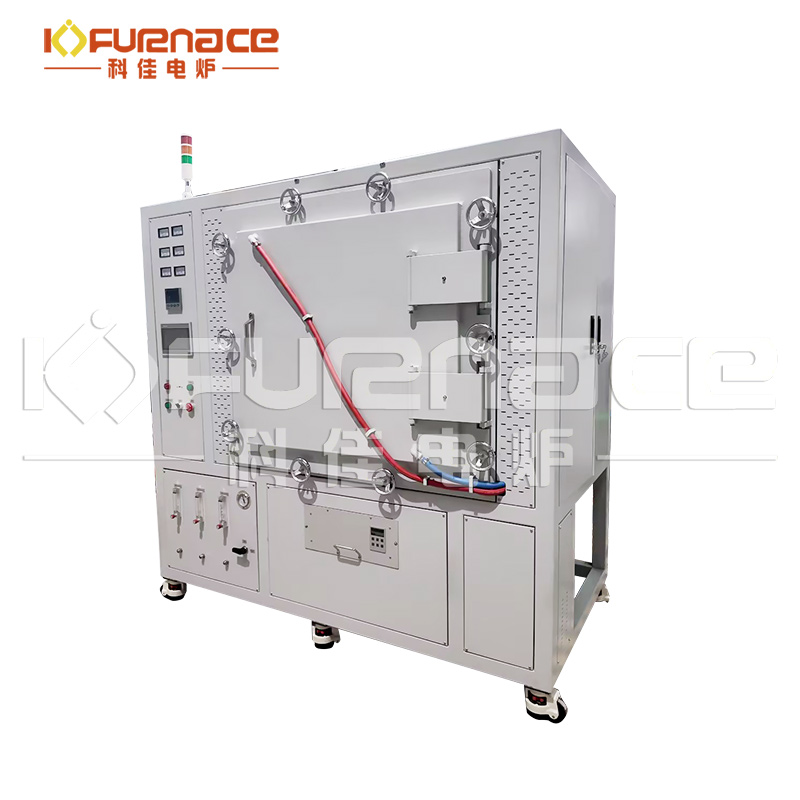
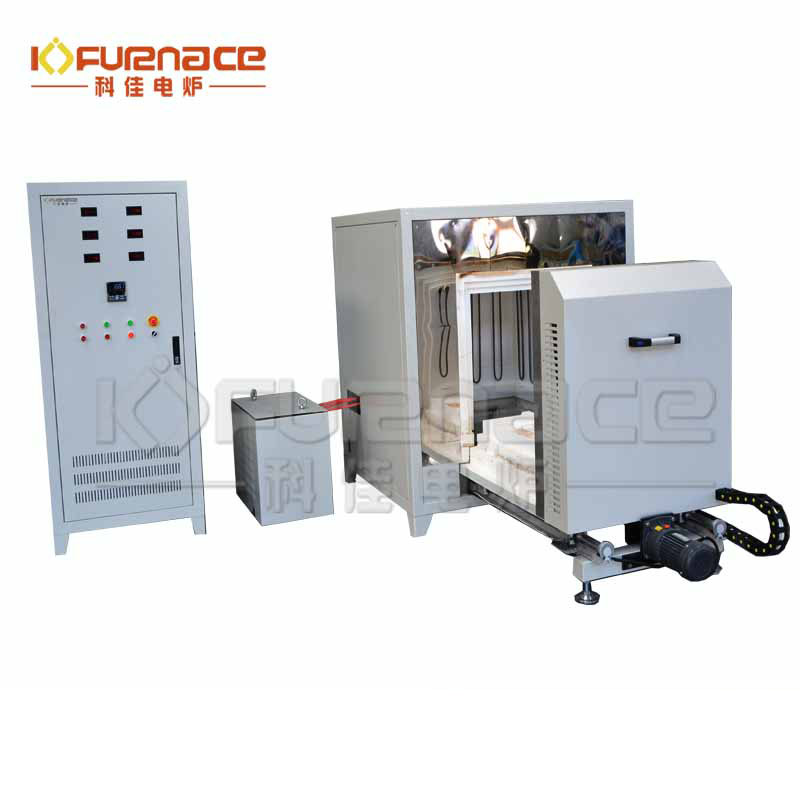
Vacuum Hot Pressing Furnace: Pressure-Temperature Synergy for Densifying Advanced Ceramics and Compo
Posted on:2026-10-27 14:56:07
1. Overview of the Vacuum Hot Pressing Furnace and Its Working Principle
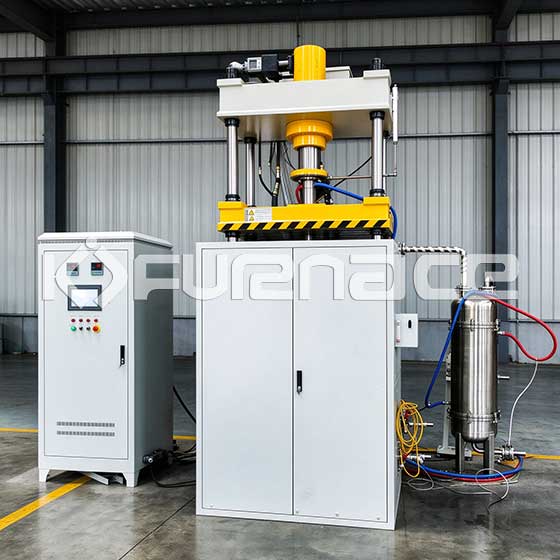
1.1 Furnace structure and working principleA vacuum hot pressing furnace applies high temperature and axial mechanical pressure simultaneously to a green body between upper and lower platens in a vacuum or protective atmosphere, driving densification through the combined action of pressure and temperature.
The furnace consists of a vacuum chamber, a graphite heating zone, a hydraulic loading system and a programmed temperature-control system. After evacuation and heating to the target temperature, the hydraulic cylinder transmits a set pressure to the part through the platens. High temperature lowers the material's flow resistance, while pressure drives particle rearrangement, plastic flow and pore closure; together they markedly shorten densification time and raise the final density.
1.2 Technical value of the pressure-temperature synergy
Hot pressing reaches densities that pressureless sintering struggles to achieve at lower temperatures, suppressing grain growth to yield fine-grained, high-strength materials.
For difficult systems such as silicon nitride, silicon carbide, transparent ceramics and metal-matrix composites, raising temperature alone triggers grain coarsening and interfacial reactions. Hot pressing introduces mechanical pressure so densification completes within a lower temperature window, preserving fine grains and superior mechanical properties, while the vacuum isolates oxidation and purifies the interfaces.
In operation the furnace runs a coordinated sequence: evacuate, ramp to the sintering window, load the pressure as the part becomes plastic, hold to densify, then cool in stages. Throughout, temperature provides the diffusion and creep driving force, pressure accelerates particle rearrangement and pore closure, and vacuum or the protective atmosphere suppresses oxidation, exhausts residual gas and cleans the interfaces.
2. Mechanism of Pressure-Temperature Synergy
2.1 Role of temperature in densification
High temperature promotes volume diffusion, grain-boundary diffusion and creep, forming sintering necks and raising plasticity so the material densifies more easily under pressure.
Temperature is the main driving force for diffusion and creep. As it rises, atomic mobility increases, sintering necks grow and pores shrink; grain-boundary sliding and plastic flow strengthen, so the applied pressure compresses the body more effectively and lowers the residual porosity.
2.2 Role of pressure in densification
Axial pressure accelerates particle rearrangement, plastic deformation at contacts and pore closure, reaching high density in a short time.
Pressure transmitted through the platens promotes particle sliding, rearrangement and contact plastic flow, closing pores quickly and raising the internal gas pressure in closed pores so it diffuses and escapes. The pressure level governs the densification rate and final density, and must stay within the mold strength and material limits.
2.3 Matching temperature and pressure
Temperature and pressure are set together for each material: raising temperature lowers the required pressure, and raising pressure lowers the sintering temperature; together they decide final density and grain size during the hold.
The soak stage is the key densification window. By coordinating ramp rate, the timing of load application and hold time, you reach the target density while restraining grain growth. For transparent ceramics and other dense fine-grained materials, a higher pressure combined with a lower temperature is often preferred.
3. Process Parameters and Molding Control Essentials
3.1 Temperature curve design
Ramp rate, soak temperature and hold time must be set by material, controlling heating and cooling to avoid thermal stress and interfacial damage.
Heating too fast creates a temperature difference inside the body that can crack it or detach interfaces; the soak temperature decides the densification rate, and too high it coarsens grains. Thick bodies and laminated composites benefit from a plateau hold that lets temperature penetrate evenly before pressure is applied.
3.2 Timing and magnitude of pressure
Pressure is usually applied as temperature approaches the sintering window; too much or too early distorts the mold or extrudes the body, and too little leaves densification incomplete.
Loading after the body enters the plastic range avoids low-temperature brittle cracking. The pressure depends on the mold material and body strength; graphite molds have limited bearing capacity, so the safe tonnage must be calculated. Load slowly and evenly to avoid shock damage to the platens and mold.
3.3 Vacuum level and atmosphere control
The vacuum suppresses oxidation, exhausts residual gas and purifies interfaces; special systems switch to argon or nitrogen to prevent component volatilization.
Vacuum level affects impurity volatilization and pore degassing, and a high vacuum is usually maintained. For volatile or atmosphere-sensitive materials, backfill with high-purity inert gas to keep positive pressure and avoid component loss and interfacial contamination under vacuum.
4. Common Problems and Countermeasures
Most problems trace to an uncoordinated pressure-temperature-time window, and each has a practical fix.
Insufficient density usually follows too little pressure, a short hold or a low temperature; raise the pressure, extend the hold and recheck the temperature window. Cracking of the body commonly comes from fast heating, premature loading or concentrated thermal stress; add a plateau hold, load after heating and raise pressure slowly. Grain coarsening is caused by too high a temperature or an overlong hold; lower the temperature, raise the pressure and control the soak. Mold distortion or damage follows excessive pressure or an undersized mold material; recalculate the safe tonnage and choose a stronger mold.
5. Typical Applications and Material Systems
5.1 Advanced structural ceramics
Silicon nitride, silicon carbide, alumina and transparent ceramics achieve high density and fine-grain structures through hot pressing, serving cutting tools, bearings, armor and optical windows.
Structural ceramics depend on high density for strength and toughness, and hot pressing is a key route to high-performance parts; transparent ceramics demand extremely low porosity and need high pressure with precise temperature control.
5.2 Composites and special materials
Ceramic-matrix composites, metal-matrix composites, graphite and special refractory materials are densified and bonded by hot pressing.
Hot pressing performs molding and densification in one step, suiting laminated, fiber-reinforced and multi-phase systems, delivering good interfacial bonding and near-isotropic properties for aerospace, electronics and energy applications.
6. Selection Guidance and Process Optimization
6.1 Equipment selection essentials
Choose temperature range, press tonnage, chamber and loading mode according to the material sintering temperature, required pressure and part size, leaving headroom for upgrades.
The rated temperature should cover the sintering window with margin; the tonnage is converted from the body area and a safe pressure; laminated materials benefit from double-sided loading for uniformity.
6.2 Process optimization direction
Optimize the pressure-temperature-time curve with refined vacuum and atmosphere control to achieve dense, fine-grained, low-defect molding.
Establish the relationship among temperature, pressure, hold time, density and grain size, and automatically match the loading timing and ramp slope to the material. Combined with vacuum monitoring and mold-life management, this is the key to unlocking vacuum hot pressing performance and scaling up advanced ceramics and composites.
Zhengzhou KJ Technology Co., Ltd. is a high-tech enterprise specializing in R&D and sales of heat treatment products, including muffle furnaces, tube furnaces, vacuum furnaces and more, widely used in metallurgy, ceramic sintering, battery materials, semiconductors, aerospace and other fields.
For inquiries and customized solutions, contact us via WhatsApp: +86 18037178440 or Email: web@kejiafurnace.com.